

DG Classification
DG Classification
It is essential to understand that your shipment might be classified as hazardous materials during international transport. Hazardous materials include items that could pose risks to human health, safety, property, or the environment. For example, products like paint, perfume, and mobile phones can be considered hazardous when shipped.
When transporting hazardous materials, it's vital to follow all applicable regulations closely. You can trust that your cargo is in good hands; our team receives ongoing training and is supervised by experienced professionals to ensure proper classification and safe handling of your goods. goods.
To give a thorough overview of hazardous cargo, there are nine main classes of dangerous goods, along with various sub-classes. Below is a list of these nine primary classes:
| Note: Place mouse over the image for description. | ||||

Class 1 : Explosives |

Class 1 : Explosives |
Class 1 : Explosives |

Class 1 : Explosives |

Class 1 : Explosives |

Class 1 : Explosives |
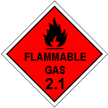
Class 2 : Gases |
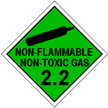
Class 2 : Gases |

Class 2 : Gases |
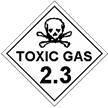
Class 2 : Gases |
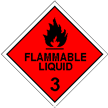
Class 3 : Flammable liquids |
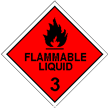
Class 3 : Flammable liquids |
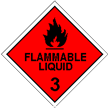
Class 3 : Flammable liquids |

Class 4 : Flammable solids |

Class 4 : Flammable solids |

Class 4 : Flammable solids |

Class 5 : Oxidizing agents |

Class 5 : Organic peroxides |
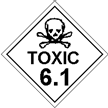
Class 6 : Poisonous toxic |

Class 6 : Infectious substances |
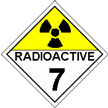
Class 7 : Radioactive substances |
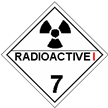
Class 7 : Radioactive substances |
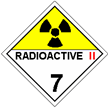
Class 7 : Radioactive substances |
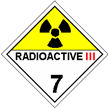
Class 7 : Radioactive substances |

Class 8 : Corrosive substances |
 Class 8 : Corrosive substances |
 Class 9 : Miscellaneous |
|||